
SMDx Detect GFAP
The SMDx Detect™ GFAP antibody is a high-performance proprietary monoclonal antibody developed specifically for the detection and quantification of GFAP (glial fibrillary acidic protein) in human plasma, cerebrospinal fluid (CSF) and tissue.
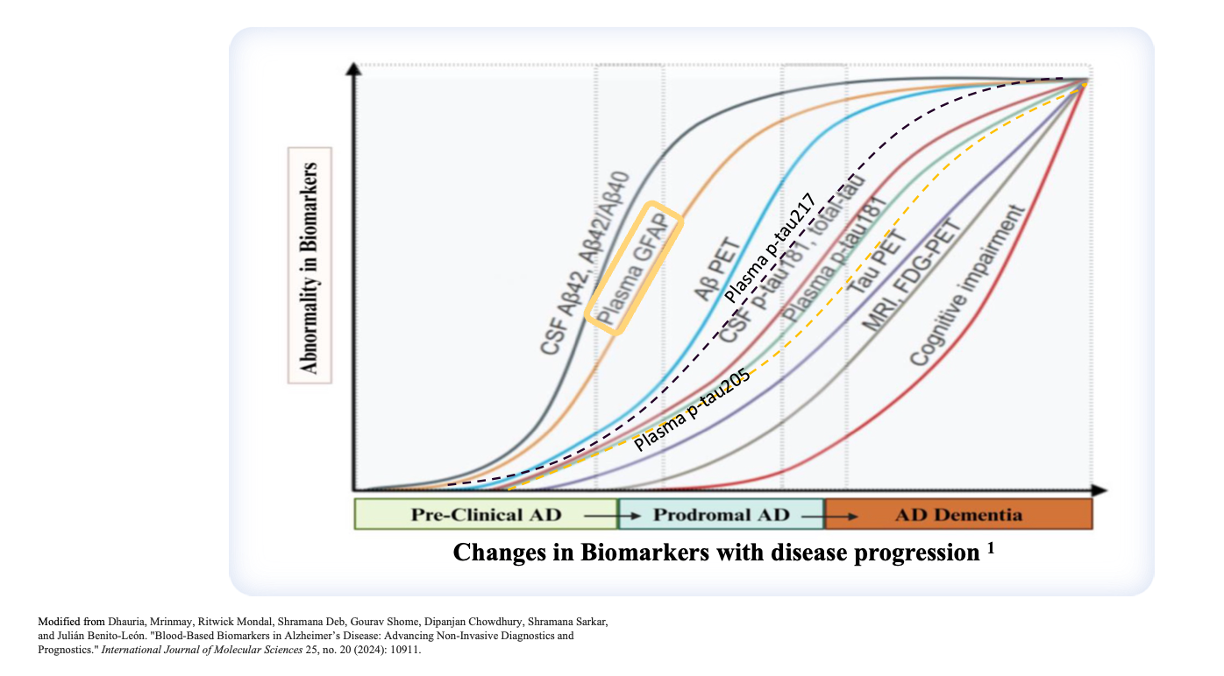
Glial fibrillary acidic protein (GFAP) is overexpressed in response to central nervous system (CNS) injury. During Alzheimer’s disease neuropathological change (ADNPC), reactive astrocytes surround β-amyloid plaques, resulting in an increase in GFAP concentration in plasma and CSF. Changes in GFAP concentrations occur prior to the appearance of AD symptoms (Fig. 1).
Several manufacturers have released blood-based GFAP assays to support research activities. However, the current diagnostic performance of these research GFAP assays has been unable to match the accuracy of gold-standard amyloid detection methodologies, such as amyloid PET or the CSF Aβ42/40 ratio.
Given that GFAP is closely linked to cognition, and considering the increasing need for early detection of ADNPC, there is a distinct opportunity for a GFAP assay that can deliver a high level of accuracy compared with amyloid PET in cognitively unimpaired (CU) populations.

Ordering information
References
- Fu, Wenting, and Paul Chi-Lui Ho. “Blood-Based Biomarkers for Alzheimer’s Disease: Advances in Early Detection and Monitoring of Age-Related Neurodegeneration.” Ageing Research Reviews (2026): 103058.
- Manuscript in Preparation -SMDx (2026)
- Jack Jr, Clifford R., J. Scott Andrews, Thomas G. Beach, Teresa Buracchio, Billy Dunn, Ana Graf, Oskar Hansson et al. “Revised criteria for diagnosis and staging of Alzheimer’s disease: Alzheimer’s Association Workgroup.” Alzheimer’s & Dementia20, no. 8 (2024): 5143-5169.
- Manuscript in Preparation -SMDx (2026)
- Lu, Ming, Min Jung Kim, Emily C. Collins, Sergey Shcherbinin, Amy K. Ellinwood, Yuma Yokoi, Dawn A. Brooks et al. “Posttreatment amyloid levels and clinical outcomes following donanemab for early symptomatic Alzheimer disease: a secondary analysis of the TRAILBLAZER-ALZ 2 randomized clinical trial.” JAMA neurology82, no. 12 (2025): 1251-1256.